Introduction
As air fryers have become a near-permanent fixture in many kitchens, manufacturers have increasingly focused their attention on two variables that matter most to everyday cooks: capacity and crisping performance. Early air fryer models tended to prioritize novelty over practicality, often featuring small baskets that struggled to accommodate more than a single serving at a time. As demand grew from larger households, and as people began relying on these appliances for regular meal prep rather than the occasional snack, the market responded with bigger, more powerful units designed to handle bigger jobs.
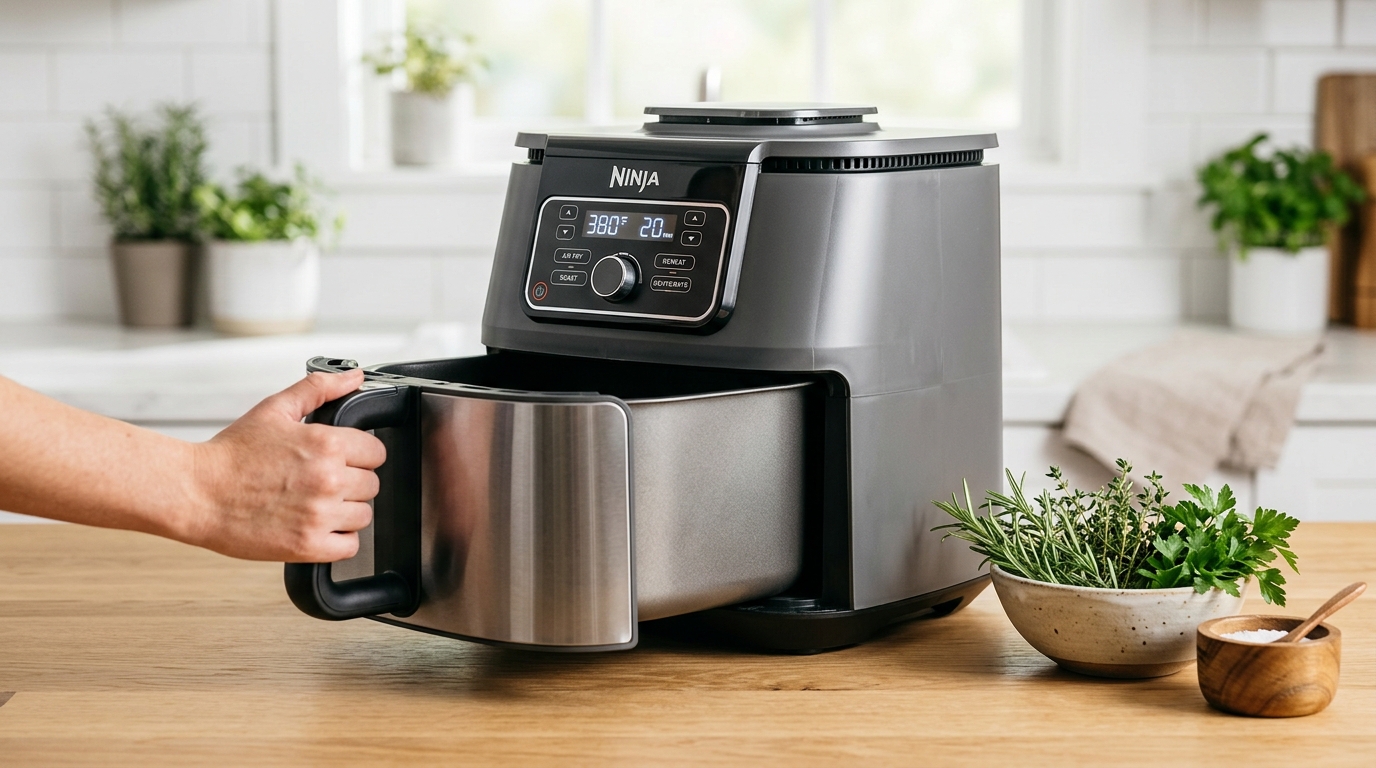
The Ninja Air Fryer XL with MaxCrisp 6.5 Qt fits squarely into that larger, performance-oriented segment of the category. Built around a 1750-watt motor and a 6-in-1 function system, it’s designed to combine a sizable cooking capacity with a dedicated high-heat crisping mode intended to push texture results further than standard air frying alone typically achieves. This article offers an independent, educational look at what this particular model provides, how it’s constructed, and what factors might be worth weighing before adding it to a kitchen.
Product Overview
The Ninja Air Fryer XL is a 6.5-quart countertop appliance powered by a 1750-watt heating element, with a maximum operating temperature of 450°F. It’s classified as a 6-in-1 unit, meaning it includes six distinct cooking modes rather than being limited to a single frying function.
Finished in grey, the appliance is designed around a basket capacity described in practical terms as being able to fit approximately nine pounds of chicken wings in a single batch — a detail intended to give buyers a tangible sense of how much food the unit can realistically handle at once, beyond a simple quart measurement. Its standout feature is the inclusion of a dedicated MaxCrisp function, positioned alongside more familiar modes like Air Fry, Roast, Bake, Reheat, and Dehydrate.
Its core purpose is to serve larger households or those who regularly cook bigger batches, while also offering a specific setting aimed at achieving a notably crispier finish than what standard air frying typically produces on its own.
Key Features
Six Built-In Cooking Functions
The appliance includes six modes: MaxCrisp, Air Fry, Roast, Bake, Reheat, and Dehydrate. Each is designed to automatically calibrate temperature and cook time based on the selected function, which may reduce the amount of manual guesswork involved in preparing a wide range of dishes.
- MaxCrisp is designed as a dedicated high-heat setting intended to produce a notably crisper exterior than the standard Air Fry mode alone typically achieves.
- Air Fry is designed for general-purpose crisping of foods like frozen snacks, breaded proteins, and vegetables using rapid, circulating hot air.
- Roast is intended to replicate conventional oven-style roasting, generally suited to vegetables or larger cuts of meat given the appliance’s sizable capacity.
- Bake is designed for smaller baking tasks that don’t require heating a full-sized oven.
- Reheat is intended to bring previously cooked food back to a safe eating temperature while aiming to preserve more texture than methods like microwaving.
- Dehydrate is built for low-temperature, extended-duration drying, useful for preparing dried fruit, vegetables, or homemade snacks.
Dedicated MaxCrisp Function
The inclusion of a distinct MaxCrisp setting, separate from the standard Air Fry mode, is one of the more notable aspects of this model. It’s designed to apply a higher level of heat intensity specifically aimed at achieving a crispier finish, which may be useful for foods like wings, fries, or other items where texture is a primary consideration.
1750-Watt Heating Element
The 1750-watt motor and heating system is designed to provide substantial power relative to the appliance’s 6.5-quart capacity, which may help support more even heat distribution throughout a larger basket compared to lower-wattage units of similar size.
450°F Maximum Temperature
With a top temperature of 450°F, the appliance is designed to accommodate higher-heat cooking tasks, including the dedicated MaxCrisp function as well as standard roasting and baking needs.
6.5-Quart Capacity with 9-Pound Wing Reference
Rather than relying solely on a quart measurement, the basket capacity is also described in terms of a practical benchmark — roughly nine pounds of chicken wings in a single batch. This kind of real-world reference point is intended to help buyers more easily visualize how much food the appliance can handle in one cooking cycle, which may be particularly relevant for larger households or those who regularly cook for groups.
Compact XL Design
Despite its larger 6.5-quart capacity, the appliance is designed to maintain a relatively manageable countertop footprint compared to some bulkier, higher-capacity models, aiming to balance batch size with reasonable kitchen space requirements.
Materials and Design
The grey exterior finish is designed to offer a neutral appearance that can fit into a range of kitchen styles without standing out excessively. The overall shape generally follows the functional, boxy profile common to larger-capacity air fryers, where usability and internal volume tend to take priority over more elaborate aesthetic details.
The basket is designed with a nonstick coating intended to reduce food sticking during the cooking process, a fairly standard feature across most modern air fryers, though the specific coating composition and durability can vary between manufacturers and models. Given the appliance’s larger capacity, the basket itself tends to be deeper and wider than those found on more compact 4-to-5-quart models, which is a relevant consideration for storage space when the unit isn’t in use.
The control panel is generally digital, with dedicated settings for each of the six cooking modes, including the standalone MaxCrisp option. This layout is designed to keep the appliance approachable, allowing users to select a labeled function rather than manually adjusting time and temperature for every type of dish.
Performance
Performance in an appliance of this scale largely depends on how effectively hot air circulates through a basket of this size. The 1750-watt heating element is designed to provide enough power to support even heat distribution across the 6.5-quart capacity, which is a meaningful consideration given that larger baskets generally require more airflow to cook food evenly compared to smaller, more compact units.
The dedicated MaxCrisp function is designed to apply higher-intensity heat specifically for achieving a crispier texture, which may be particularly relevant for foods like wings or fries where a pronounced crisp exterior is often the primary goal. As with any air fryer, actual results will vary depending on factors such as how full the basket is, the type of food being prepared, and whether food is shaken or rearranged partway through the cooking cycle to help promote even crisping.
Given the larger capacity, users may find that fuller batches require somewhat more attention to arrangement and occasional repositioning to help ensure that food throughout the basket cooks at a similarly even rate, particularly compared to smaller, less densely packed loads.
Common Uses
This type of larger-capacity, crisping-focused air fryer is generally suited for:
- Family-sized meals, where the 6.5-quart capacity may reduce the need to cook in multiple batches for bigger households.
- Game day or entertaining occasions, particularly given the appliance’s practical nine-pound wing capacity reference, which suggests it’s well suited to preparing larger quantities of appetizer-style foods.
- Achieving extra-crispy textures, using the dedicated MaxCrisp setting for foods where a pronounced crunch is the primary goal.
- Roasting larger cuts of meat or vegetables, using the Roast function given the appliance’s sizable interior capacity.
- Small-batch baking, using the Bake setting for items that don’t require a full-sized oven.
- Dehydrating homemade snacks, using the Dehydrate function for dried fruit, vegetables, or jerky over an extended cooking period.
Advantages
- Larger cooking capacity: The 6.5-quart basket, with its practical nine-pound wing reference, may be particularly useful for bigger households or those who regularly cook for groups.
- Dedicated crisping function: The MaxCrisp setting offers an additional layer of control for those specifically prioritizing texture in their cooking results.
- Strong heating element: The 1750-watt motor is designed to support even heat distribution across a larger basket, which may help produce more consistent results compared to lower-wattage units of similar size.
- Six-function versatility: Combining crisping, frying, roasting, baking, reheating, and dehydrating into one appliance may reduce the need for multiple separate kitchen tools.
- High maximum temperature: Reaching up to 450°F allows the appliance to accommodate higher-heat cooking tasks alongside its standard functions.
- Practical capacity reference: Describing basket capacity in terms of pounds of wings may make it easier for buyers to estimate realistic portion sizes for entertaining or family meals.
Things to Consider
A handful of practical points are worth reviewing before purchasing:
- Larger overall footprint: A 6.5-quart air fryer generally requires more counter and storage space than smaller, more compact models, so measuring available space in advance is a reasonable step.
- Potential for uneven cooking in fuller batches: Given the larger basket size, foods packed toward capacity may benefit from more deliberate shaking or repositioning to help ensure even results throughout.
- Learning curve for six functions: With six distinct modes, including the specialized MaxCrisp setting, new users may need some time to determine which function best suits a given type of food.
- Basket maintenance over time: Like most nonstick surfaces, the coating generally benefits from gentler cleaning methods to help preserve its performance and appearance over repeated use.
- Personal texture expectations: Even with a dedicated high-crisp function, some individuals may find air-fried textures different from traditional deep-fried food. Whether the MaxCrisp setting meets individual expectations for crispness is ultimately a matter of personal preference rather than a fixed characteristic of the appliance.
Comparison with Similar Product Categories
Compared to smaller, compact air fryers in the 4-to-5-quart range, this 6.5-quart model is generally designed to accommodate larger households or batch cooking needs, though it typically requires more counter and storage space in exchange for that added capacity. Smaller units may be more practical for individuals or couples who don’t regularly need to prepare large quantities of food at once.
Compared to air fryers without a dedicated high-heat crisping function, models like this one that include a MaxCrisp-style setting are generally designed to offer an additional option for those specifically prioritizing texture, whereas simpler models may rely solely on a standard air fry setting for all crisping needs.
Compared to full-sized convection ovens, even a larger-capacity air fryer like this one typically offers a smaller overall footprint and faster preheating, given its more compact internal chamber, though full ovens generally provide greater capacity for very large meals or multiple dishes cooked simultaneously.
Compared to other multi-function air fryers offering a similar six-function lineup, differences generally come down to specific details like maximum wattage, basket capacity, and whether a dedicated high-crisp setting is included as a standalone function or folded into the standard air fry mode.
Maintenance and Care
Routine maintenance can help preserve both the performance and appearance of this type of appliance over time. General care recommendations typically include:
- Allowing the unit to cool completely before cleaning, both to protect the nonstick coating and to avoid burns.
- Hand washing the basket with a soft sponge and mild dish soap, or using a dishwasher if the specific model and components are rated for it, always checking manufacturer guidance first.
- Wiping down the exterior with a damp cloth to remove grease or food splatter, avoiding harsh chemical cleaners that could affect the finish over time.
- Checking the interior heating element periodically for stray food debris, since buildup in this area can interfere with airflow and affect cooking consistency, particularly given the appliance’s larger internal volume.
- Drying all removable components thoroughly before reassembling or storing the unit, to help prevent trapped moisture or lingering odors.
- Storing the appliance in a dry location, ideally with the basket removed or the unit left slightly open to allow for adequate air circulation between uses.
Referring to the manufacturer’s included instructions remains the most reliable way to maintain both the safety and performance of the appliance over its lifespan.
Frequently Asked Questions
1. What household size is this air fryer best suited for? The 6.5-quart capacity, with a practical reference of roughly nine pounds of wings, is generally well suited to larger households or those who regularly cook for groups.
2. What does the MaxCrisp function do differently from standard Air Fry? MaxCrisp is designed as a dedicated high-heat setting intended to produce a crispier exterior than the standard Air Fry mode typically achieves on its own.
3. How many cooking functions does this appliance include? It includes six modes: MaxCrisp, Air Fry, Roast, Bake, Reheat, and Dehydrate.
4. What is the maximum temperature this model reaches? It reaches up to 450°F, which is designed to support both the MaxCrisp function and other higher-heat cooking tasks like roasting.
5. How much food can the basket hold in a single batch? The basket is designed to accommodate approximately nine pounds of chicken wings in one cooking cycle, offering a practical reference point for larger meals or entertaining.
6. Can this appliance dehydrate food? Yes, the Dehydrate function is designed for low-temperature, extended-duration drying, useful for items like dried fruit or homemade snacks.
7. Is the basket dishwasher safe? This can vary depending on specific model details, so checking the included manual is recommended before placing components in a dishwasher.
8. Does a fuller basket cook less evenly than a smaller load? Larger, fuller batches may benefit from more deliberate shaking or repositioning during cooking to help support even results throughout the basket.
9. Is this air fryer too large for a small kitchen? That depends on available counter and storage space; the 6.5-quart size does have a larger footprint than compact air fryers, so measuring in advance is a reasonable step.
10. Does the Reheat function help restore texture to leftovers? It’s designed to bring food back to temperature while aiming to preserve more original texture compared to methods like microwaving.
11. Is preheating necessary before cooking? This can vary depending on the specific recipe and food type, so checking the included instructions is generally the more reliable approach.
12. Does this appliance require special kitchen ventilation? As with most countertop cooking appliances, reasonable airflow around the unit is generally advisable, along with whatever standard kitchen ventilation is already in place.
Final Thoughts
The Ninja Air Fryer XL with MaxCrisp 6.5 Qt represents a segment of the air fryer market built around larger batch sizes and a dedicated focus on crisping performance. With a 1750-watt heating element, a practical nine-pound wing capacity reference, and a standalone MaxCrisp setting alongside five other cooking modes, it’s designed to serve households that regularly cook in larger quantities or specifically prioritize a crispier finish on foods like wings and fries.
As with any kitchen appliance, whether this particular model fits a given household ultimately depends on factors like typical batch sizes, available counter space, and how much emphasis a person places on texture when preparing air-fried foods. Reviewing the manufacturer’s specifications and included instructions ahead of time can help set clear, realistic expectations before use.